
Face your numbers with calm.
Build systems that run themselves, and keep more of what you earn.
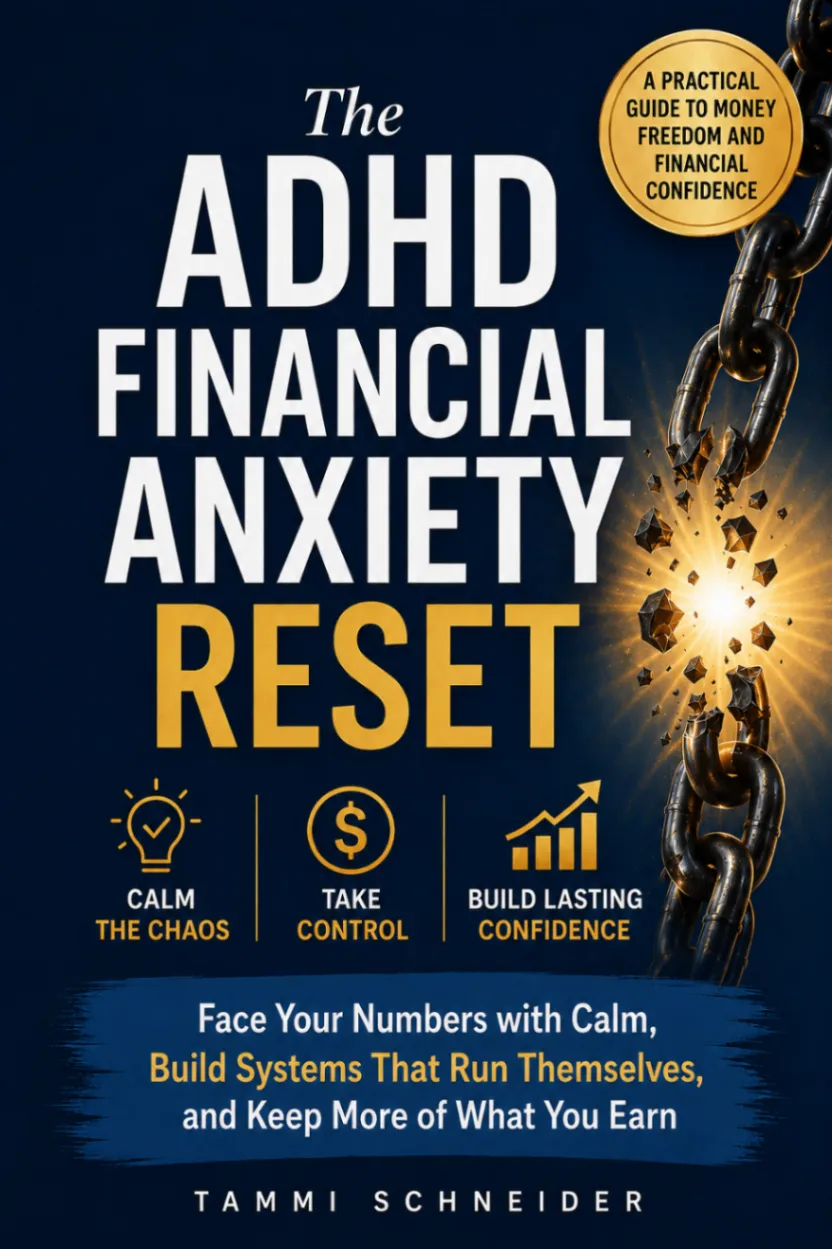
Your chest tightens at the thought of reviewing your bank statements. This book is for that.
Maybe it's a stack of envelopes you could count if you wanted to, but you don't want to, because counting them means admitting they're there. Maybe it's a banking app you've arranged your thumb not to land on. Either way, you know the specific tightening that happens in the half-second before you look, and you've built your life around not finding out.
This isn't a budgeting book. You've probably already tried the spreadsheet, the app, the color-coded categories, the cash envelopes — and they worked for nine days, then not at all. That wasn't you failing. A line-item budget asks for a working memory and daily self-monitoring your brain doesn't reliably have.
This book takes the decisions away from your daily willpower and hands them to a system:
- Autopay stacks that make late fees mathematically rare, plus calendar triggers for the bills that don't accept autopay
- A weekly batch session that catches the paper mail, the irregular charges, and the subscriptions you forgot existed
- Separated accounts so one balance stops meaning four things at once
- A five-minute daily money check-in, anchored to a cue you already have
- A 90-second pause built to interrupt 2 a.m. impulse buys
- A script for the moment you finally open the statement and the number is worse than you feared
- A reset protocol for the week the system breaks — because it will
It also covers what most money books skip: the inherited money story running underneath your spending, how sleep and medication timing quietly decide your next purchase, and how to split shared money with a partner without turning "did you pay the electric bill" into a fight.
You'll meet a teacher with seven months of unopened envelopes in a desk drawer, a freelancer who keeps a rough balance in his head because the real number feels too expensive to check, and a woman still running a money rule she picked up at her kitchen table at age nine. None of them get fixed by discipline. They get a system that catches the mail, the app, and the moment they finally look — whether they feel ready or not.
By the end, so will you.